What Makes Powder Coating Systems More Reliable Than Liquid Finishing?

Equipment durability often depends less on the product itself and more on how it is finished. Manufacturers looking for consistent quality increasingly compare powder coating systems against traditional liquid finishing to solve repeat defects, downtime, and rework. The reliability gap between the two methods becomes clear once performance, process control, and long-term durability are examined side by side.
Difference of Powder Coating Systems to Liquid Finishing Methods
Powder coating systems operate on a dry application process, while liquid finishing relies on solvents to carry pigments and resins. This single difference changes how the coating behaves before, during, and after application. Powder flows evenly across surfaces without sagging, dripping, or flashing off unevenly, which removes many variables that cause defects in wet paint systems.
Liquid finishing methods depend heavily on environmental control, viscosity balance, and spray technique. Small changes in temperature or humidity can shift results from one batch to the next. Powder coating equipment removes much of that unpredictability by applying material that stays stable until cured, allowing operators to achieve consistent coverage with fewer adjustments.
Uses That Favor Powder over Traditional Wet Paint Processes
Applications that require durability, repeatability, and high throughput often favor powder over liquid finishes. Industrial components, outdoor equipment, and fabricated metal parts benefit from coatings that resist chipping, corrosion, and UV exposure. Powder coating systems are especially well suited for parts that must meet strict quality standards across large production runs.
Liquid finishing still has its place for specialty textures or low-volume decorative work. However, for operations prioritizing efficiency and long-term performance, powder coating equipment packages deliver better reliability. The ability to coat complex shapes evenly without constant rework makes powder a strong fit for demanding production environments.
Why Powder Systems Deliver Tougher Surface Protection
Powder coatings form thicker, more uniform films than most liquid paints. This thickness provides added resistance against scratches, impacts, and chemical exposure. Because the coating melts and flows during curing, it bonds tightly to the substrate without weak spots.
The absence of solvents also improves film integrity. Liquid finishes can trap solvents as they dry, leading to pinholes or soft spots. Powder coating systems avoid this issue entirely, producing a dense, continuous surface that holds up better under stress and repeated handling.
How Powder Coating Lowers Waste and Cleanup Time
Overspray waste is one of the biggest inefficiencies in liquid finishing. Excess paint often becomes hazardous waste, increasing disposal costs and cleanup time. Powder coating equipment allows unused material to be reclaimed and reused, reducing material loss dramatically.
Cleanup also becomes simpler. Without solvents, operators spend less time flushing lines or cleaning spray booths. Powder coating systems streamline end-of-shift maintenance, allowing more uptime and less labor devoted to housekeeping rather than production.
The Role of Electrostatic Application in Better Coverage
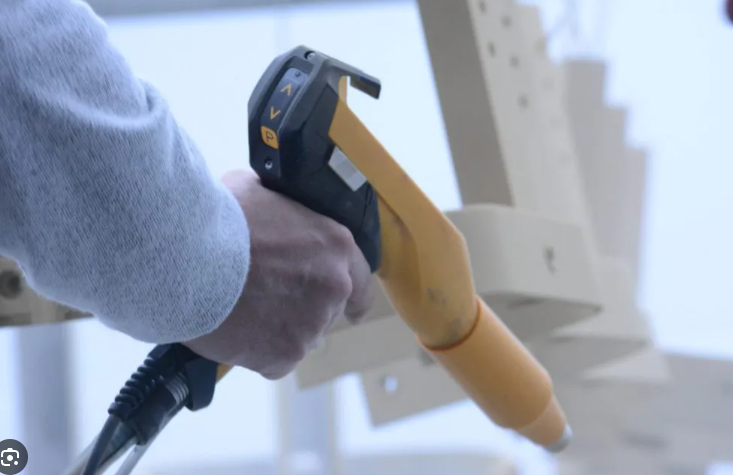
Electrostatic attraction plays a central role in powder coating reliability. Charged powder particles are drawn to grounded metal surfaces, wrapping around edges and recessed areas that liquid paint often misses. This creates more even coverage without excessive material buildup. Liquid finishes rely on spray angle and air pressure to reach hidden surfaces, which increases the risk of thin spots. Electrostatic application reduces that dependency, allowing powder coating equipment to achieve consistent results across complex geometries with less operator effort.
Why Heat Curing Makes Coatings Harder and More Uniform
Curing is where powder coatings truly separate themselves from liquid finishes. Powder melts and chemically cross-links under heat, forming a solid film with uniform hardness. This controlled reaction eliminates many of the drying inconsistencies seen in air-cured liquid paint. An industrial powder coating oven ensures precise temperature control throughout the curing process. Even heat distribution allows coatings to reach full hardness consistently, reducing soft areas or incomplete cures that can weaken liquid finishes over time.
How Powder Systems Stand up to Abrasion and Impact
Abrasion resistance is a critical factor for parts exposed to friction, movement, or repeated contact. Powder coatings excel in this area due to their dense molecular structure and strong adhesion. Finished parts maintain appearance and protection even after extended use.
Liquid finishes tend to wear through faster, especially at edges or contact points. Powder coating systems provide thicker edge coverage, reducing premature failure. This makes them a preferred choice for equipment expected to endure rough handling or outdoor exposure.
The Role of Efficient Booths and Ovens in Consistent Finishes
Reliability depends not only on coating material but also on the supporting equipment. Efficient spray booths control airflow, prevent contamination, and improve powder recovery. A well-designed booth ensures that every part enters the curing stage with uniform coverage. Equally important is the performance of powder coating ovens. Consistent airflow and temperature stability inside the oven determine final coating quality. Integrated powder coating equipment packages align booth performance with oven curing, creating a repeatable process that minimizes variation from batch to batch.
Reliant Finishing Systems delivers high-performance powder coating systems designed for consistency, durability, and long-term production reliability. Their equipment is engineered to support efficient application, controlled curing, and repeatable finish quality across demanding environments. With a focus on precision-built systems, they help manufacturers achieve dependable results while streamlining their finishing operations.